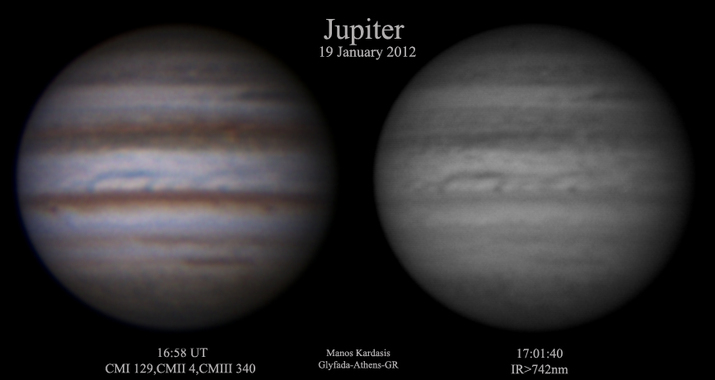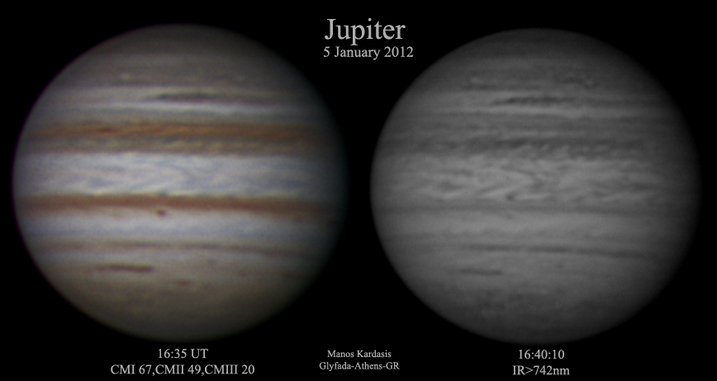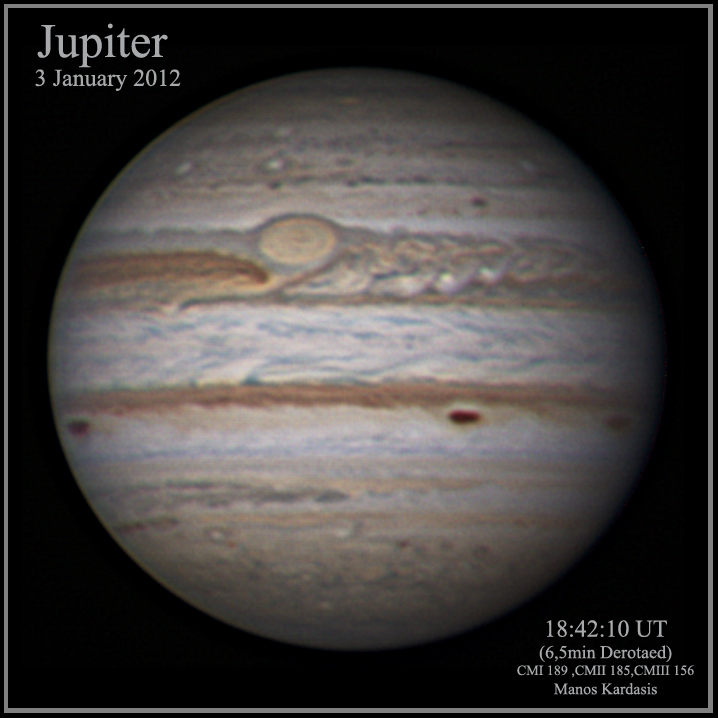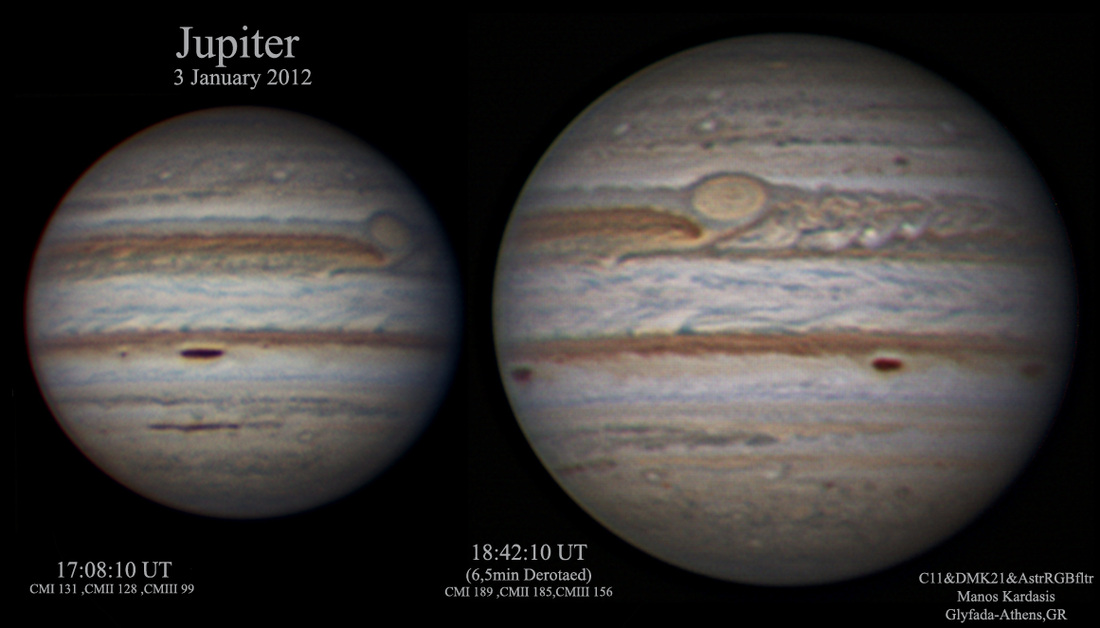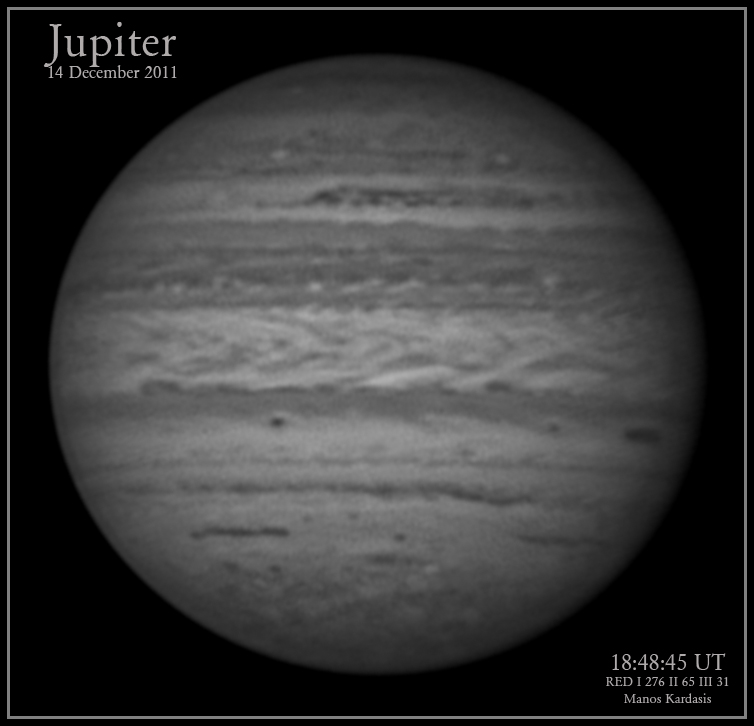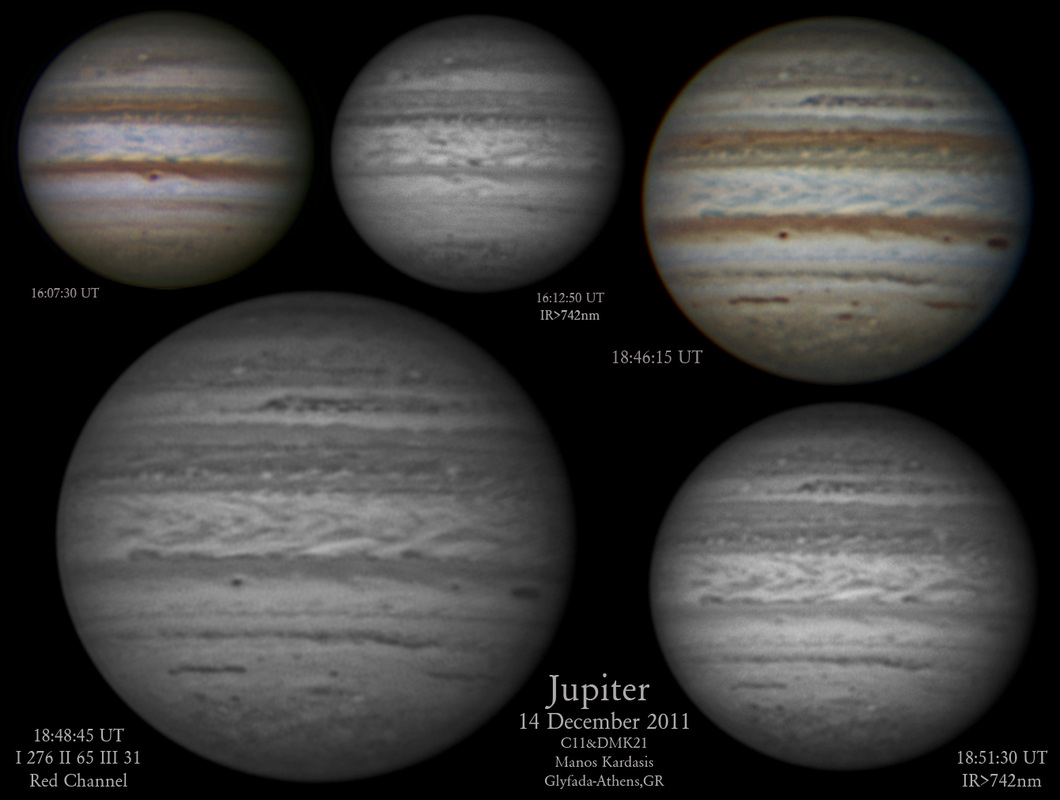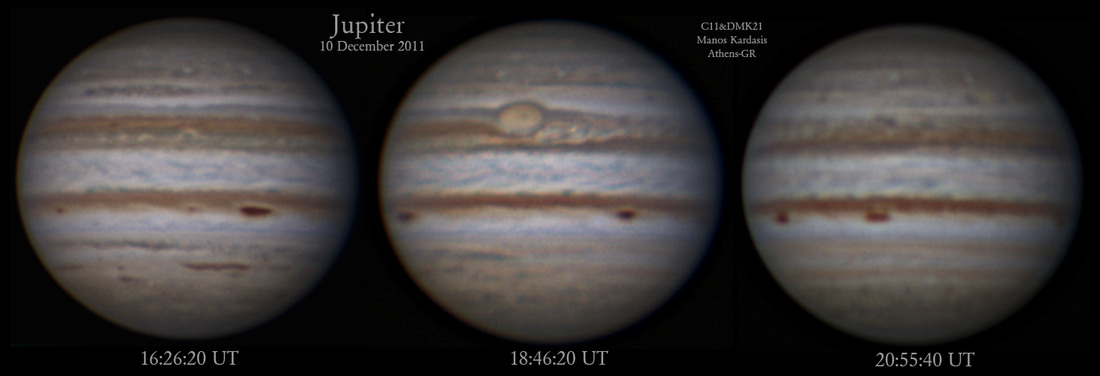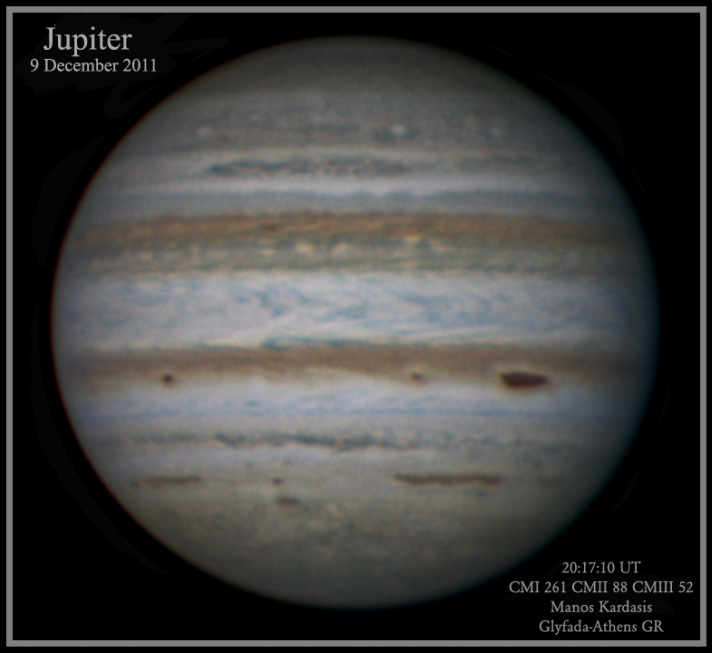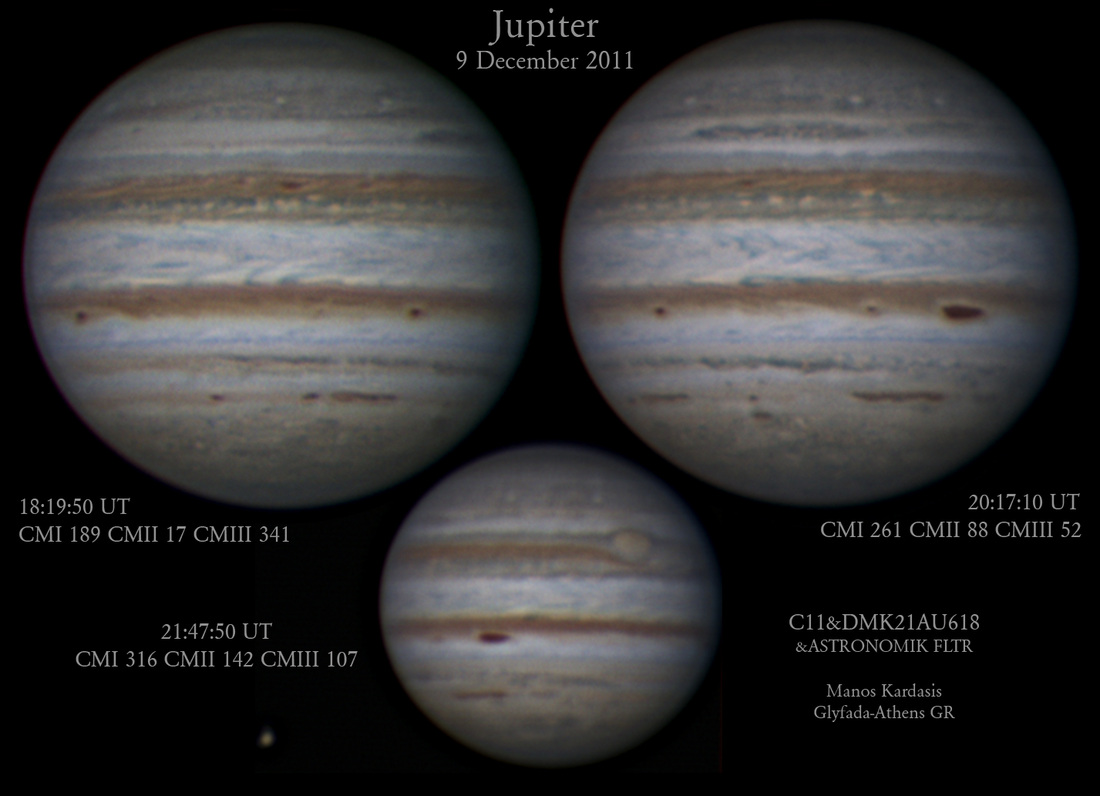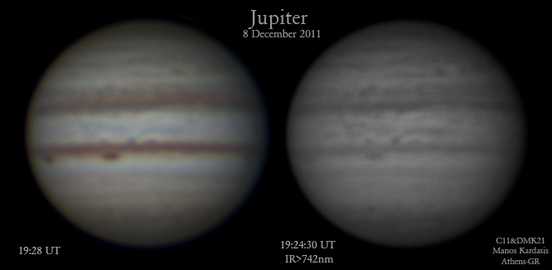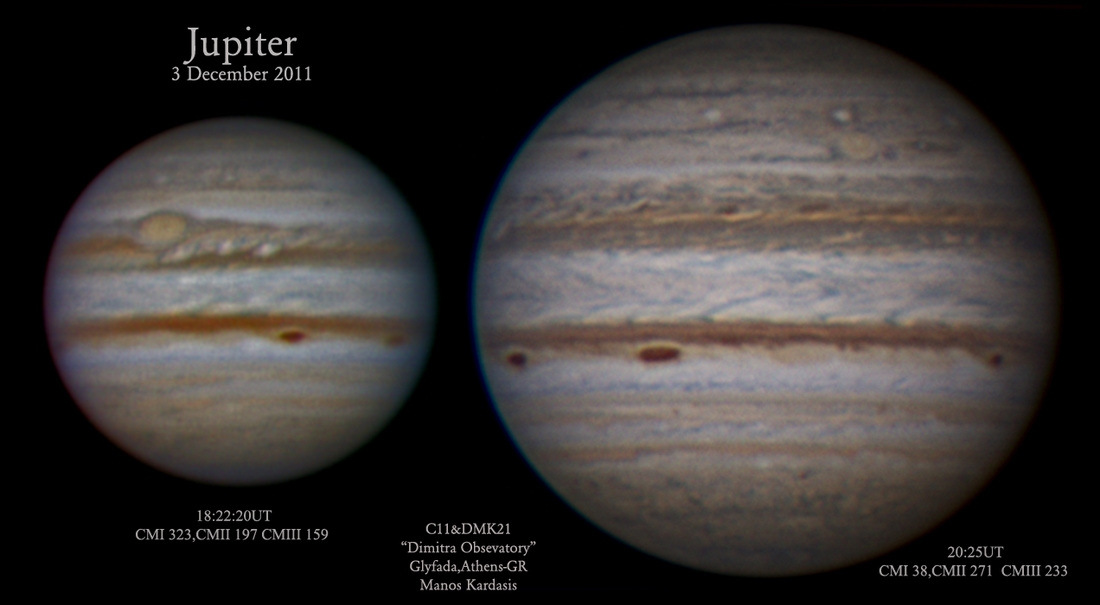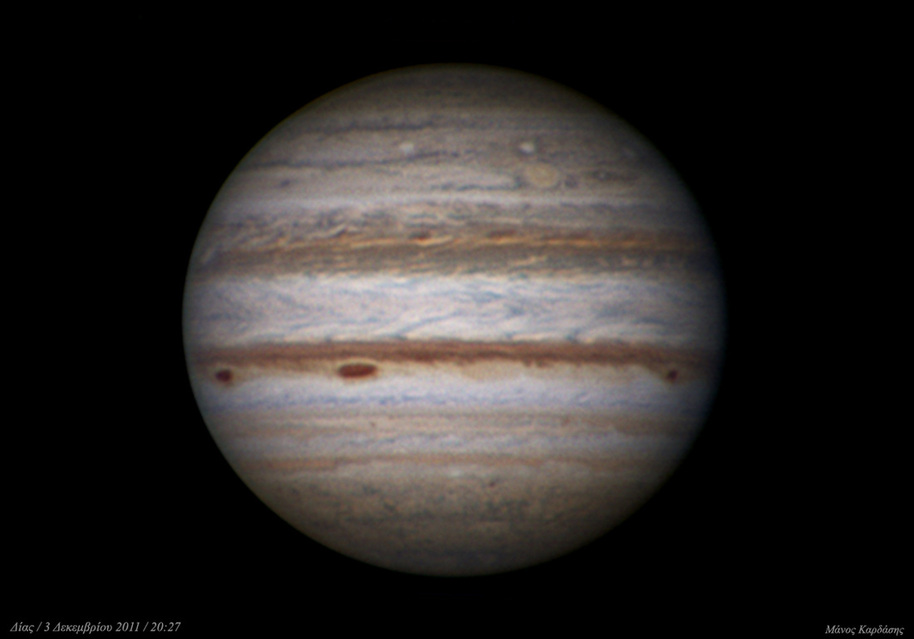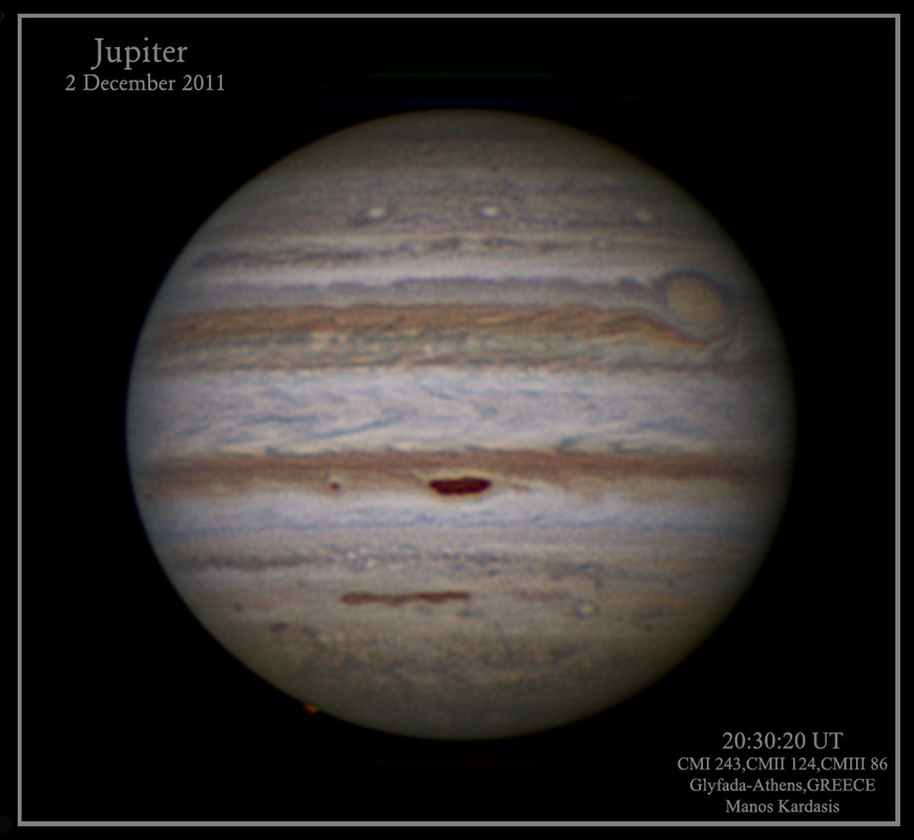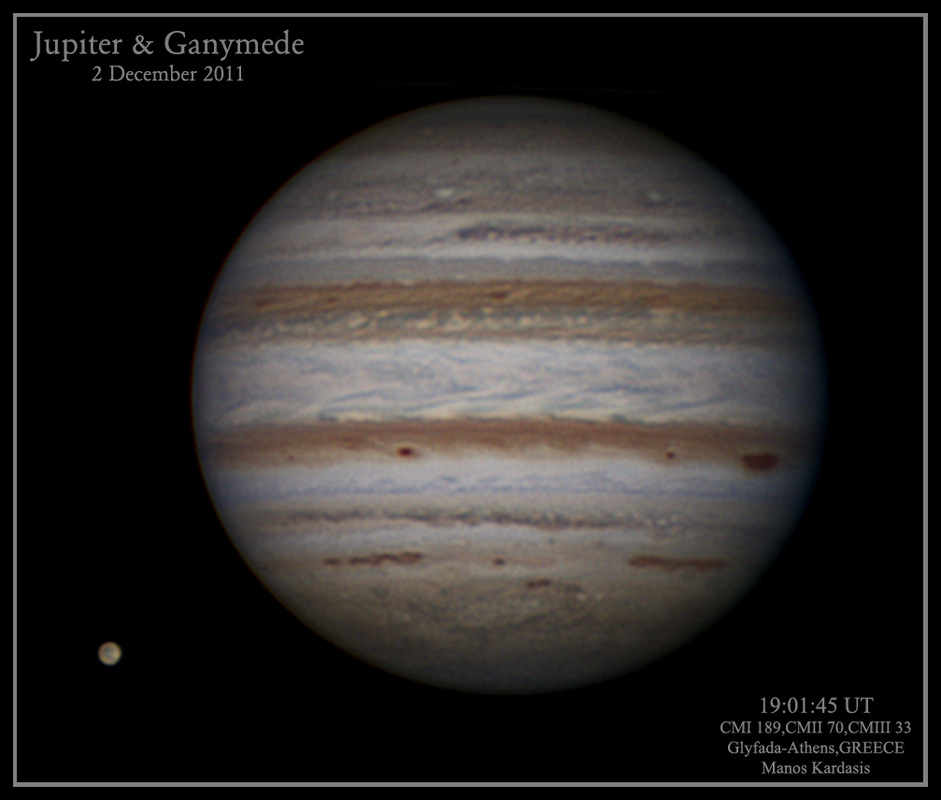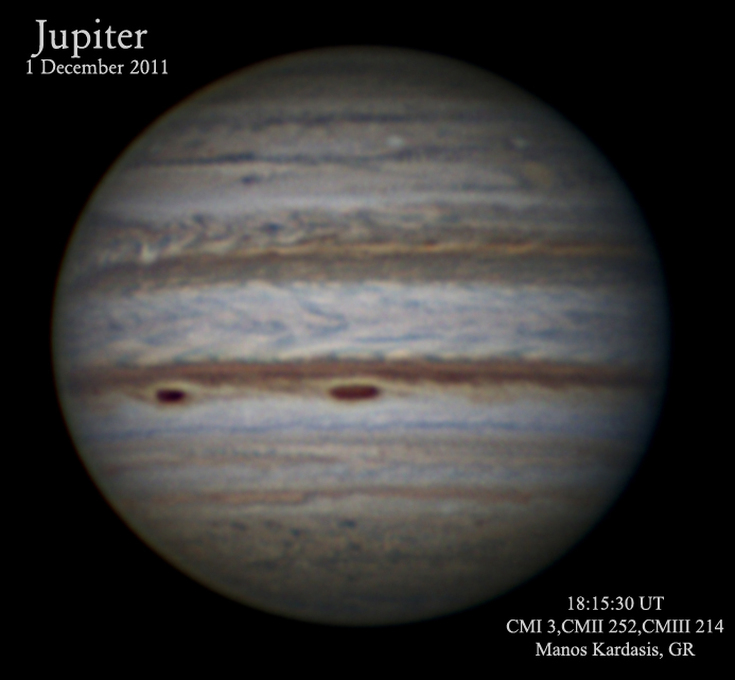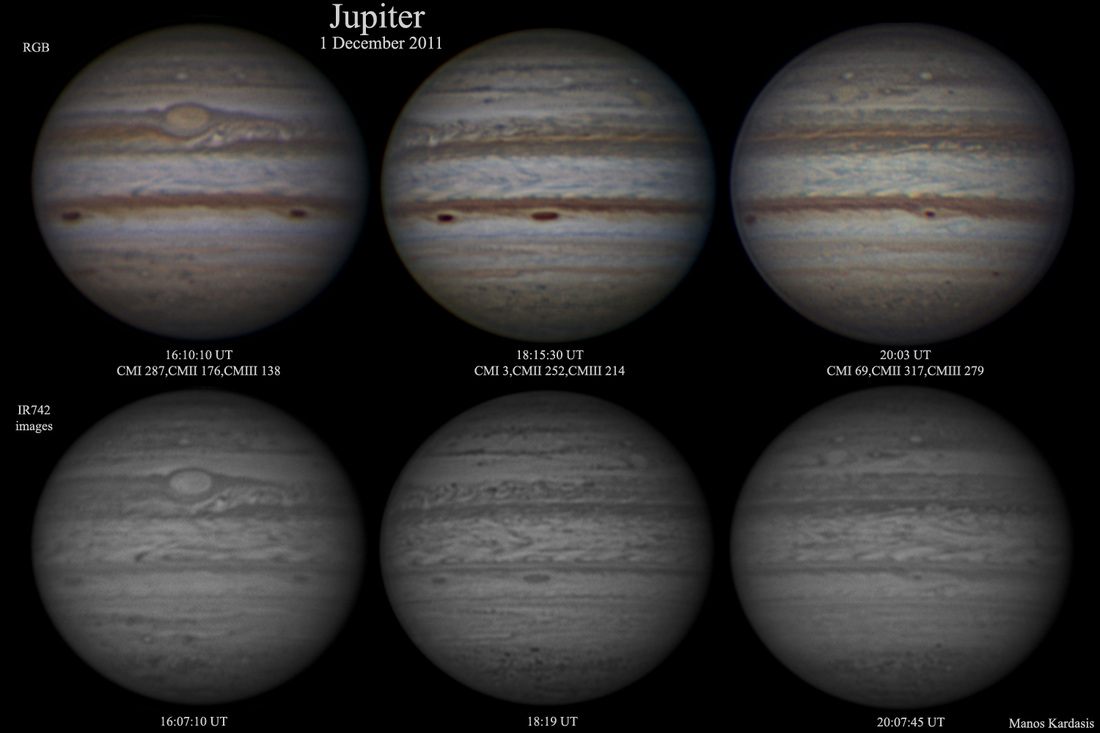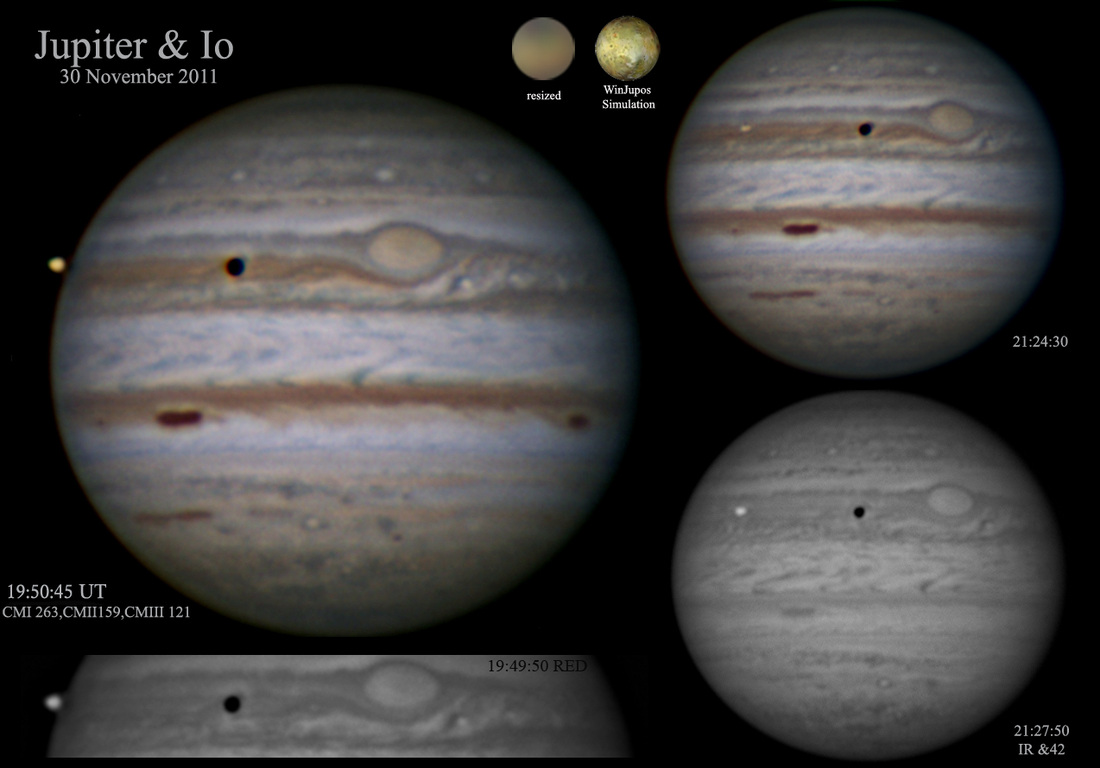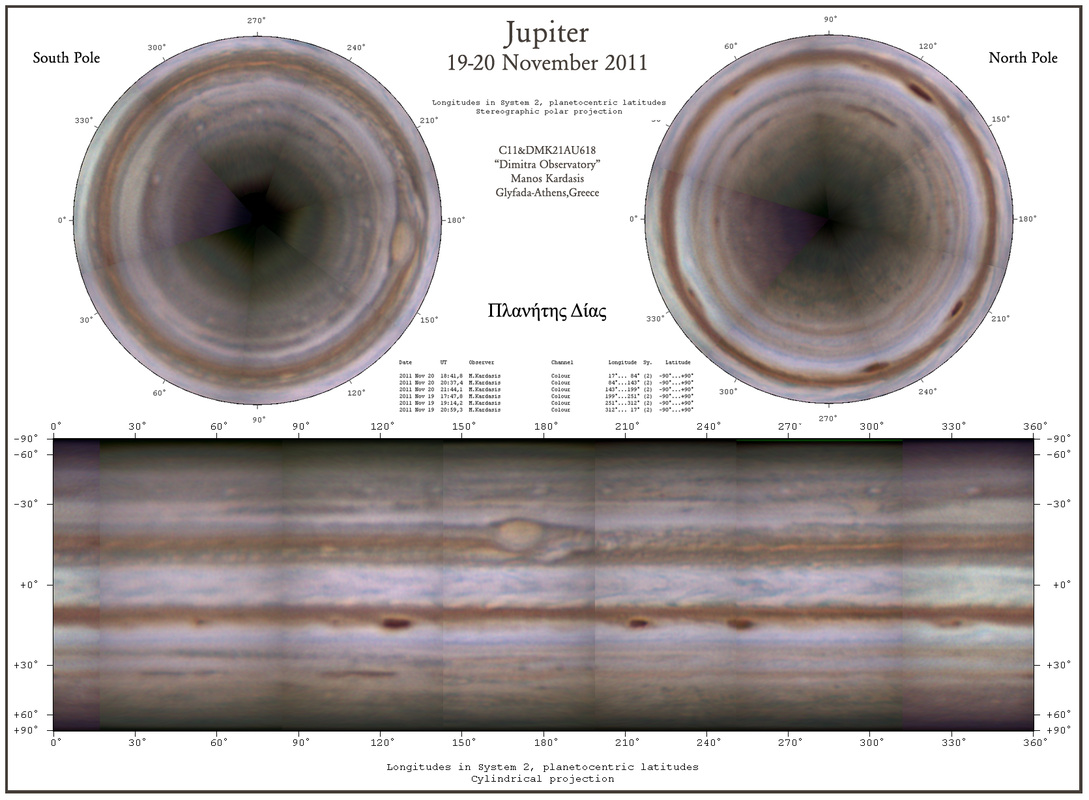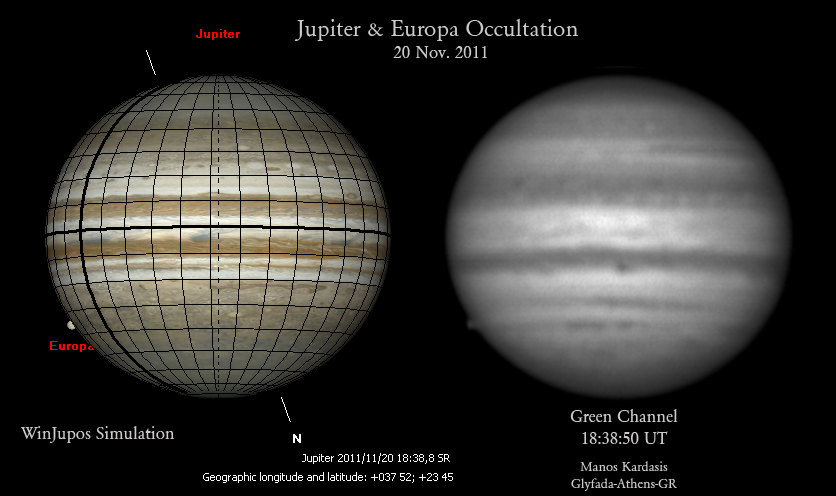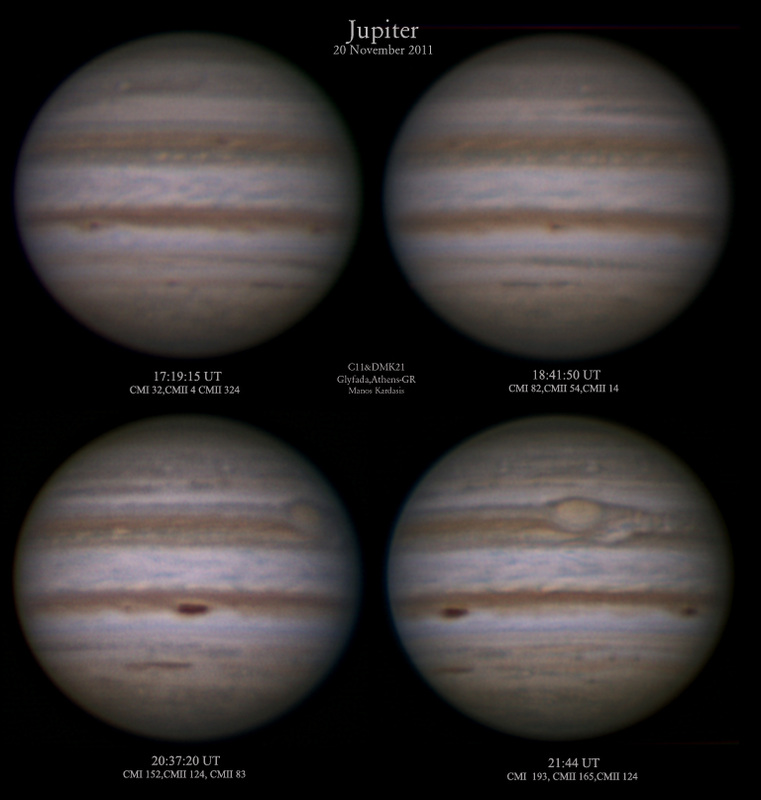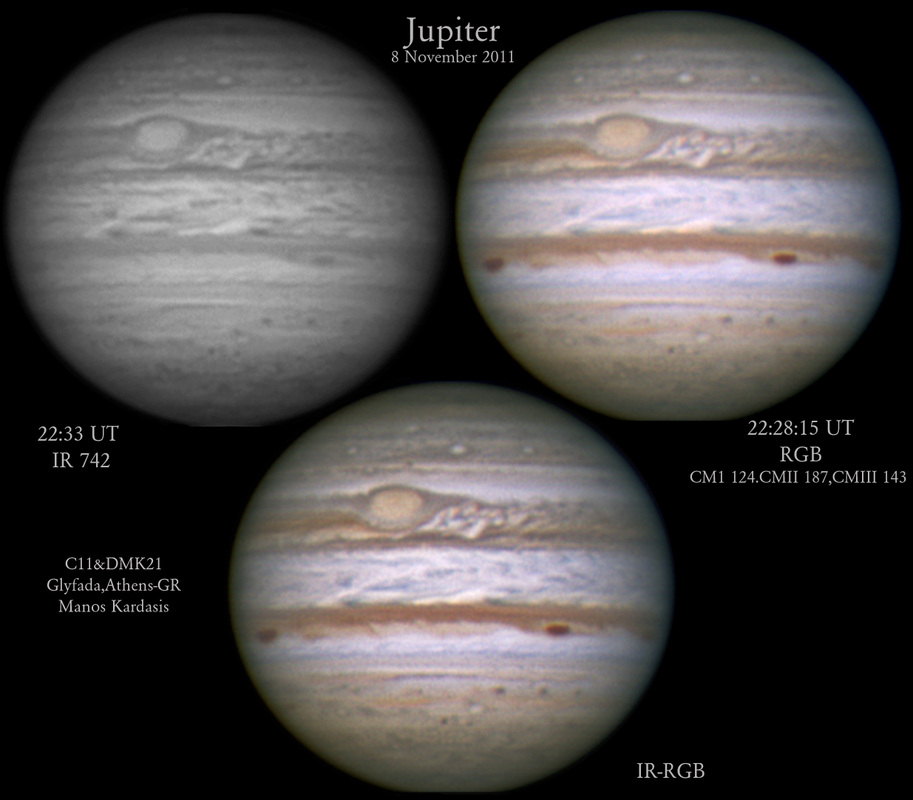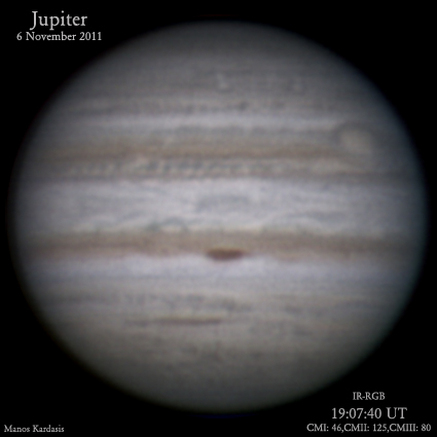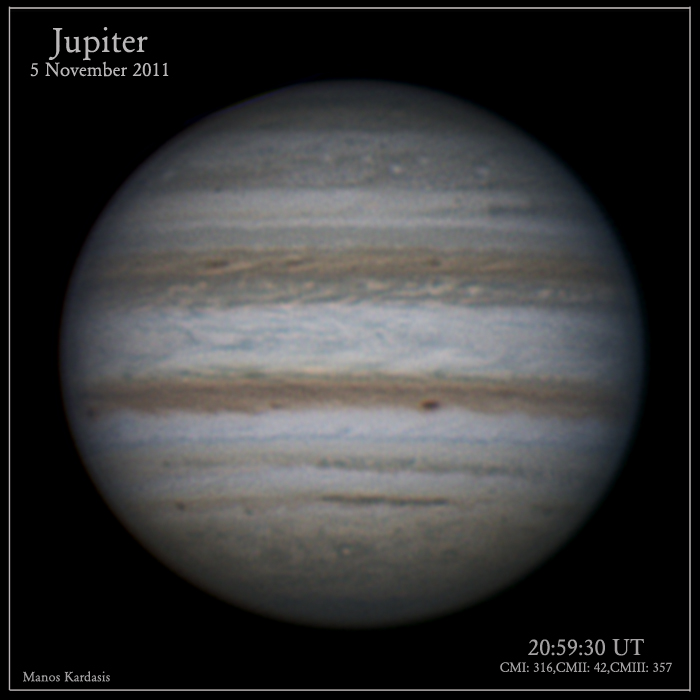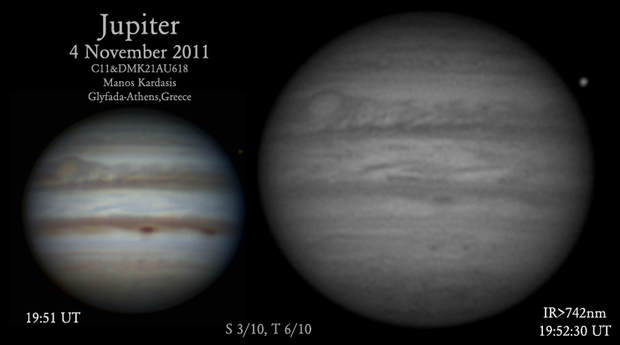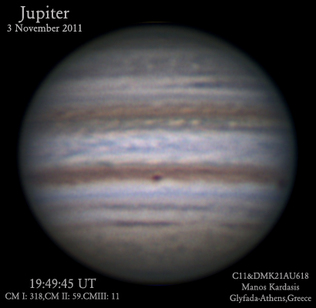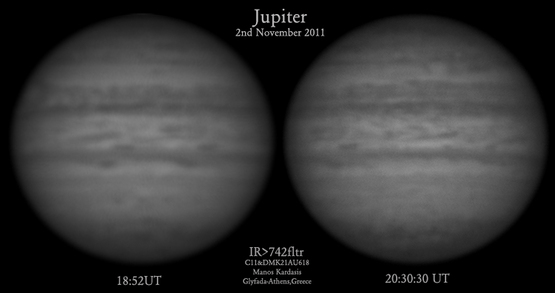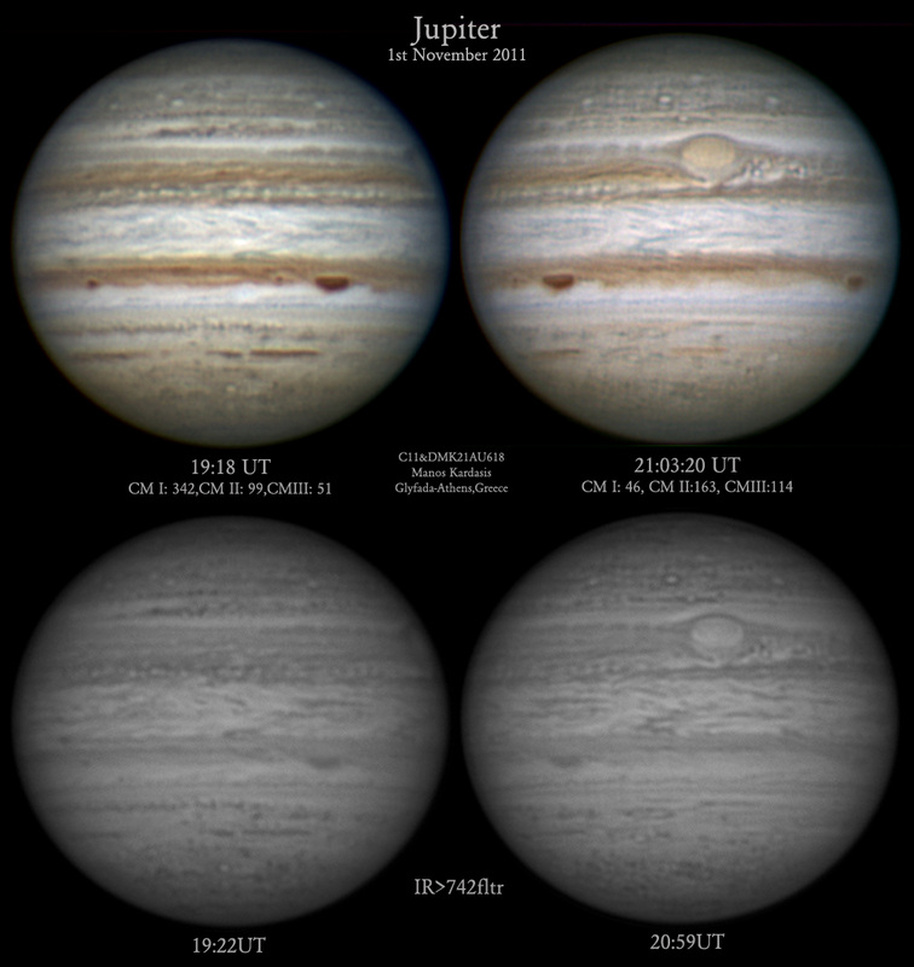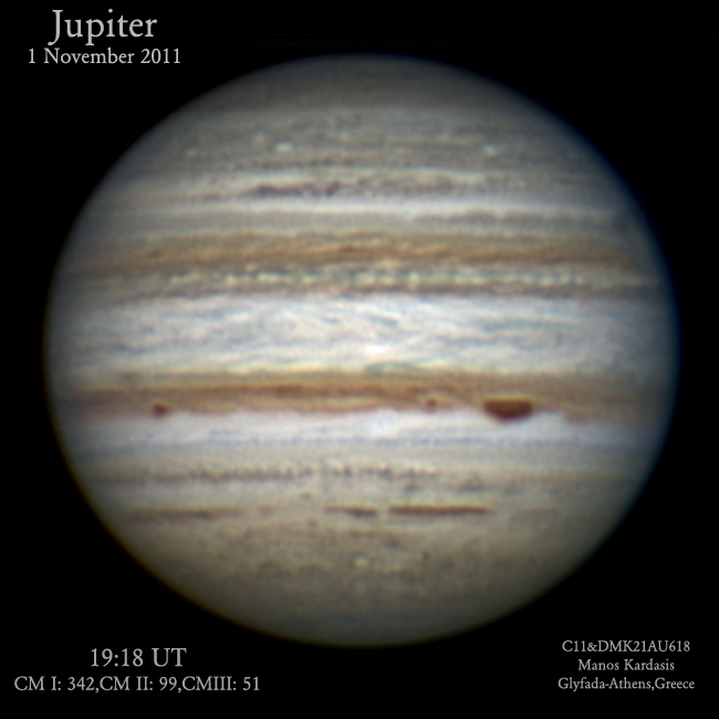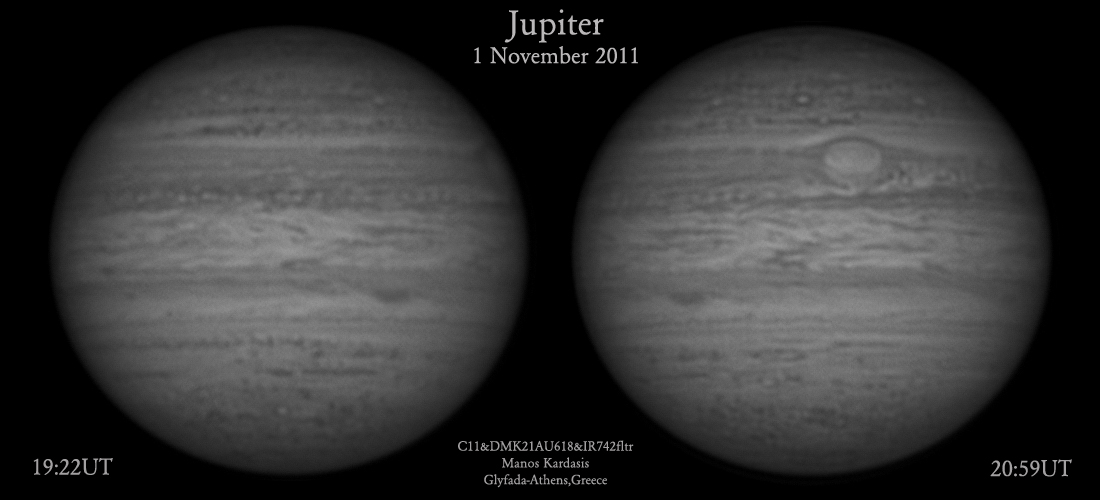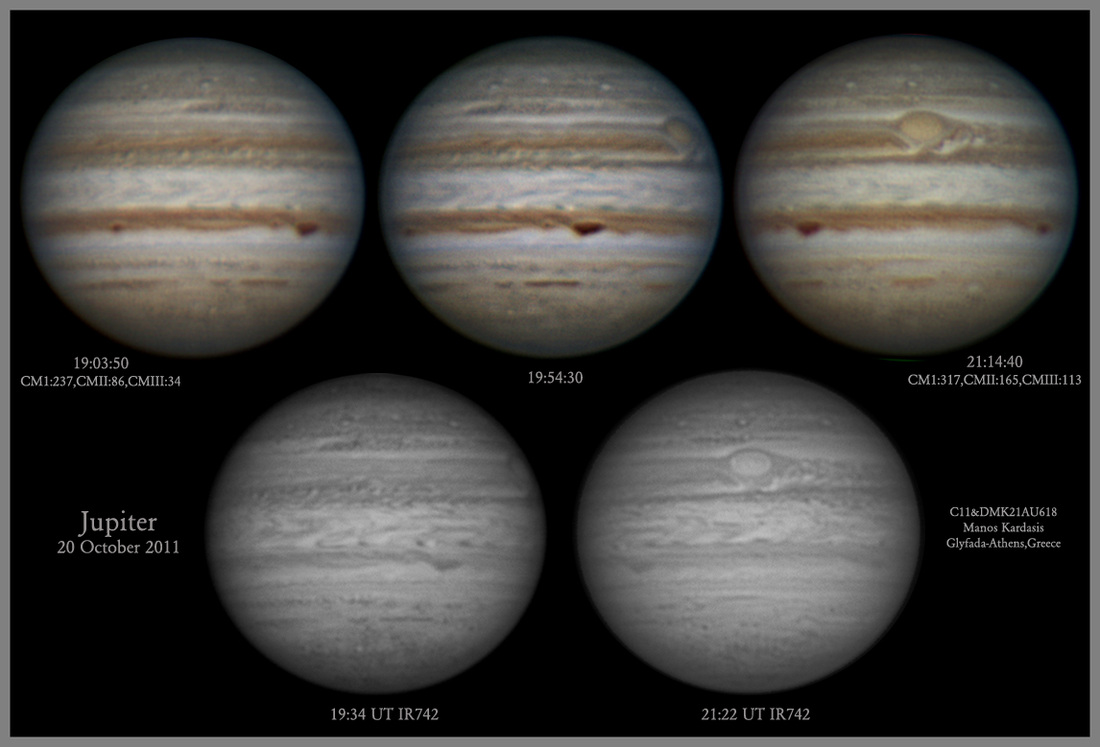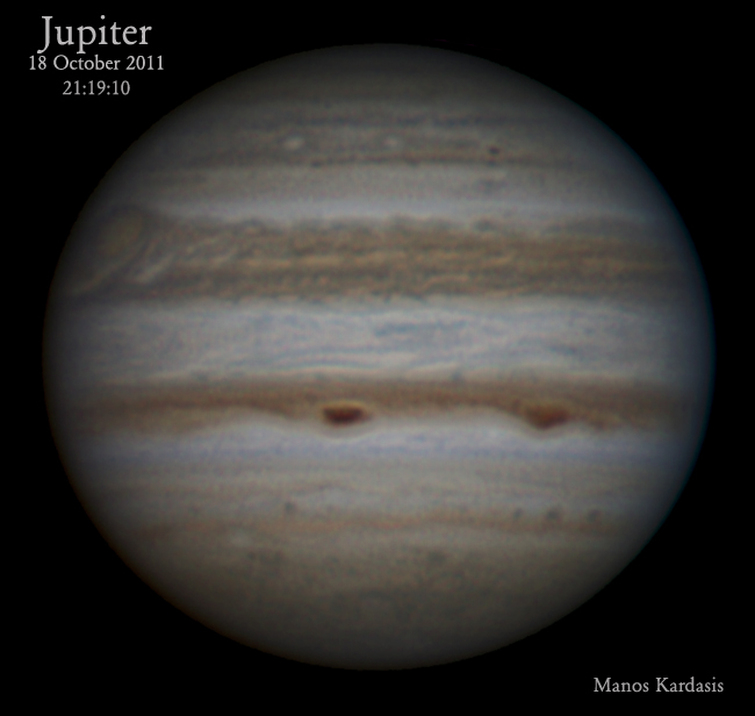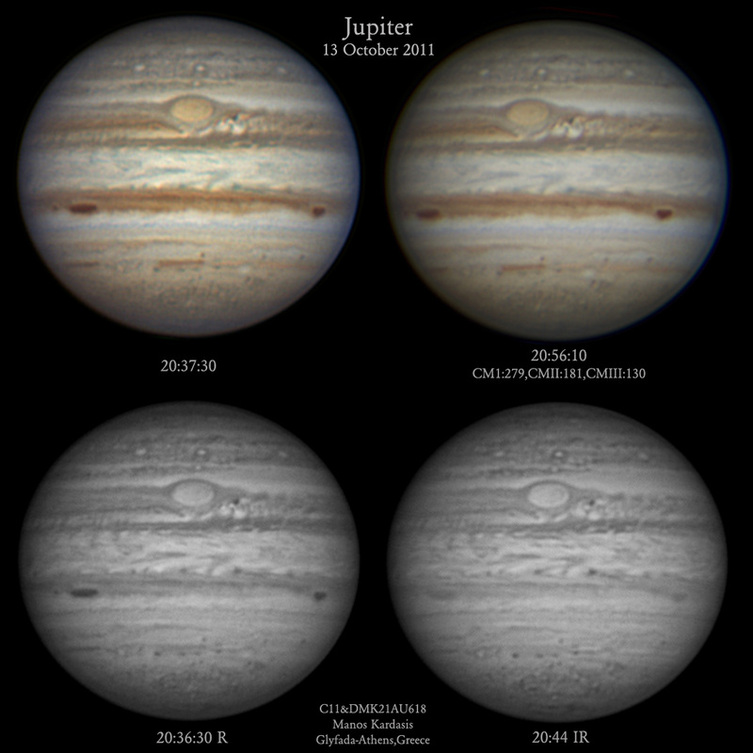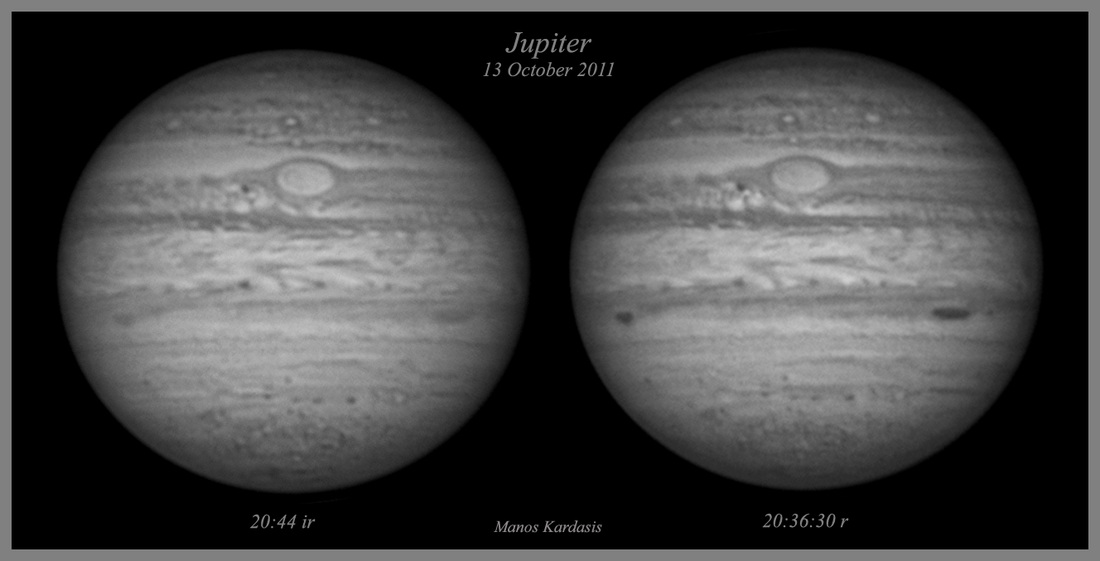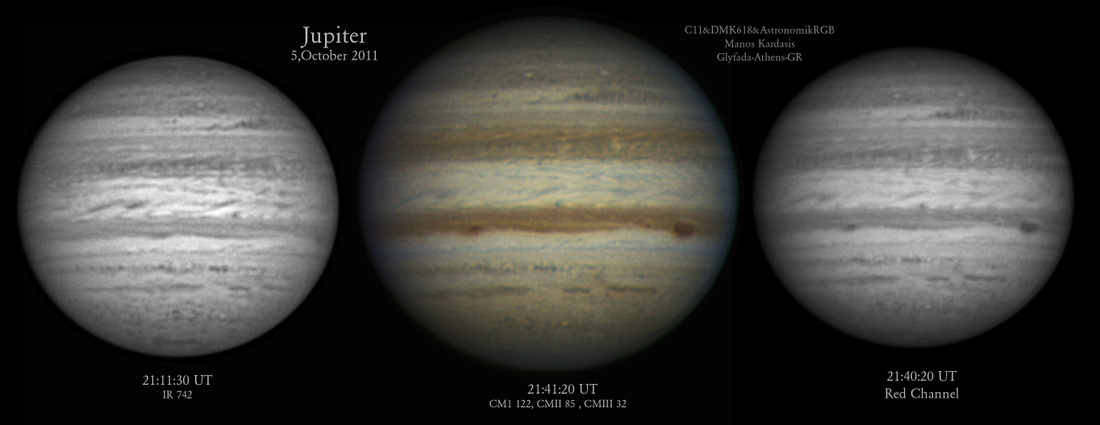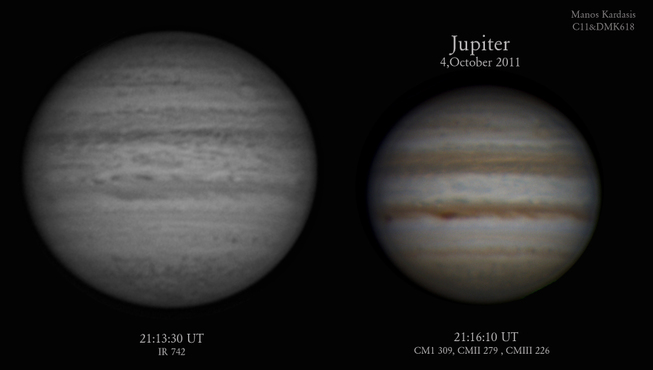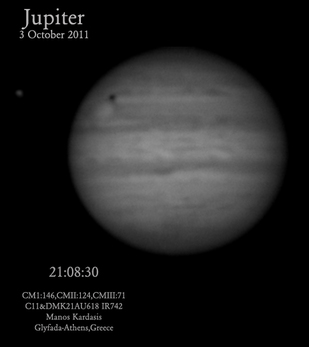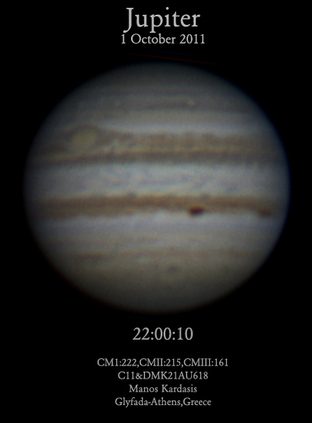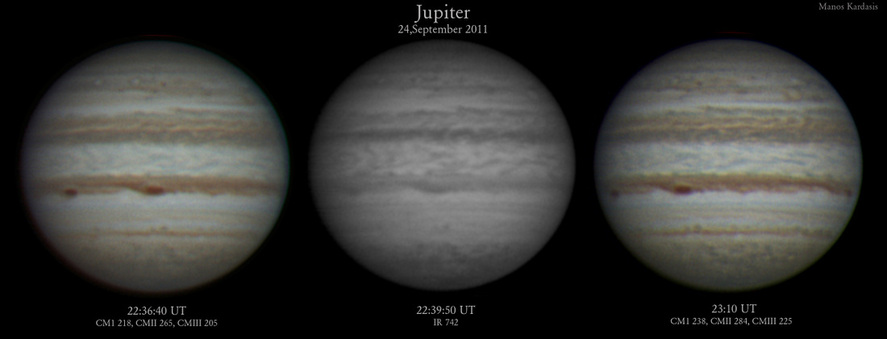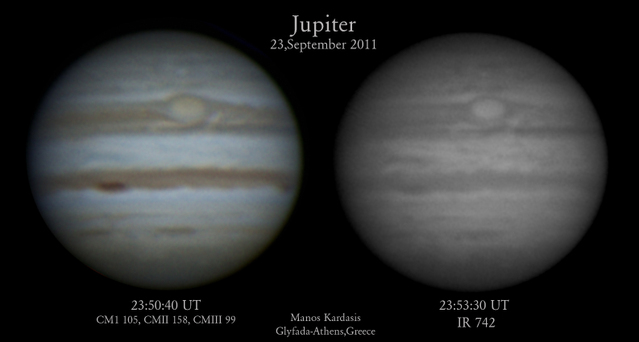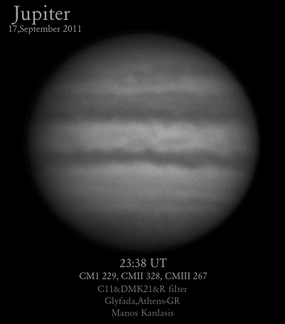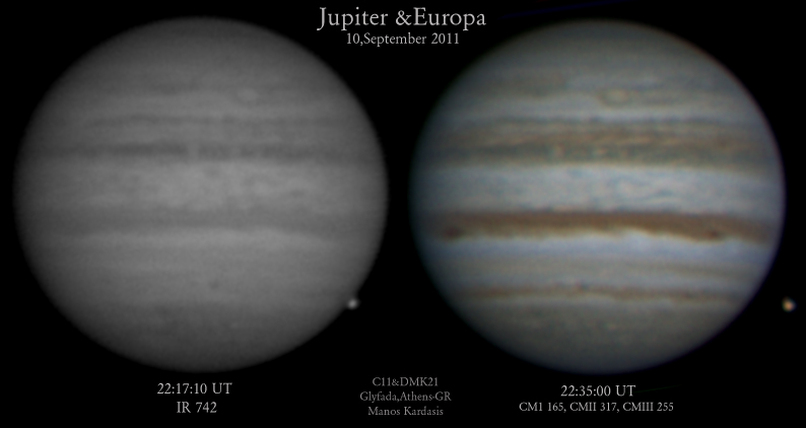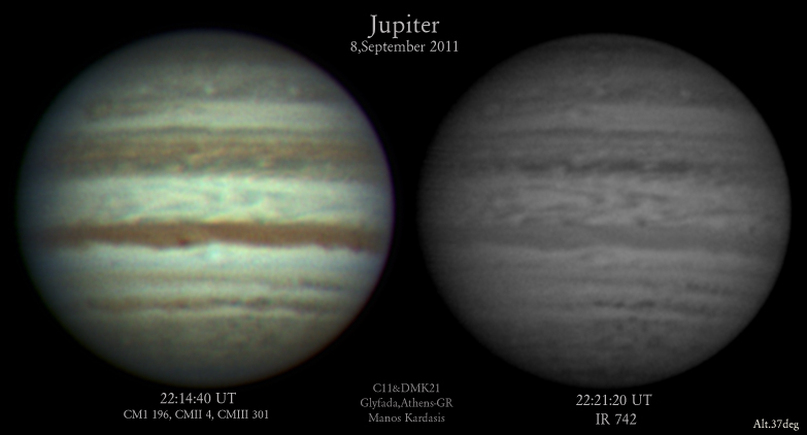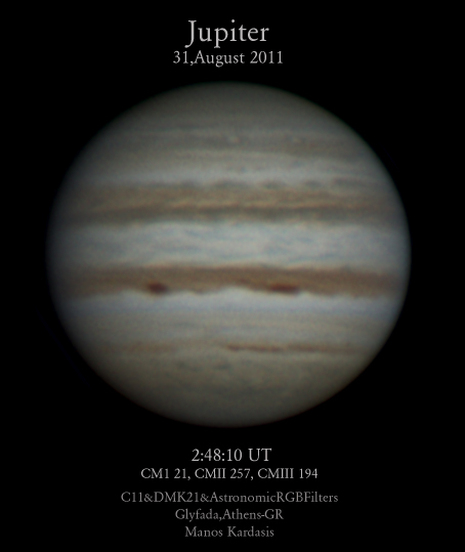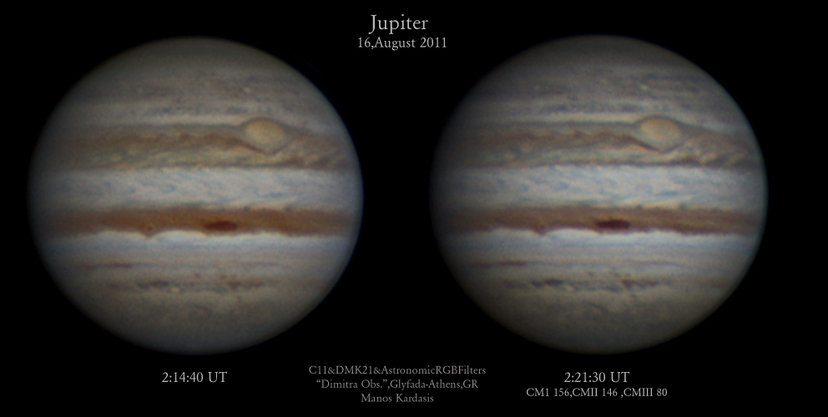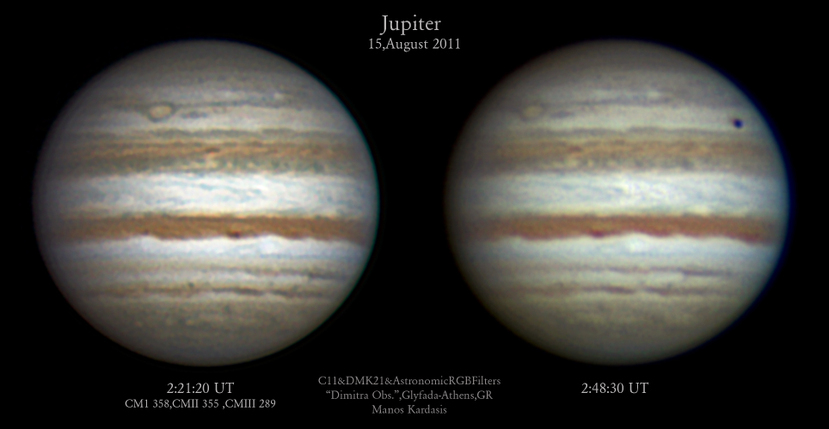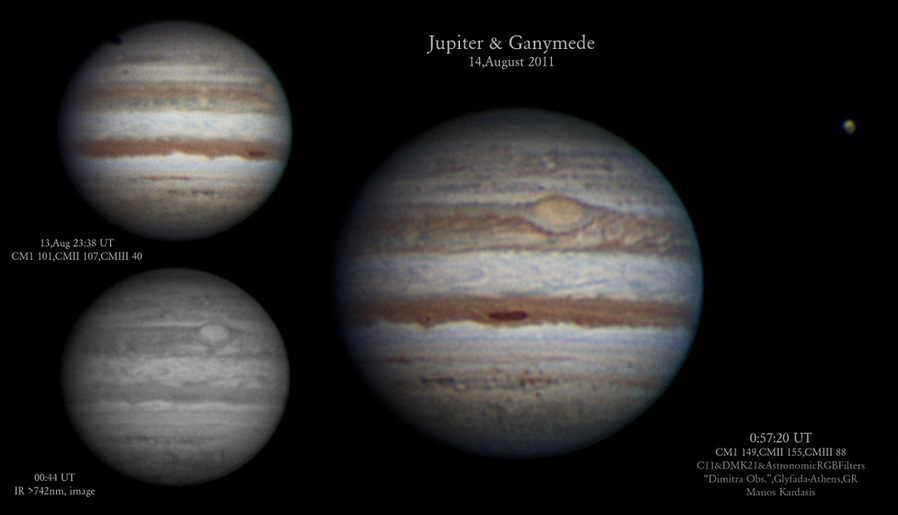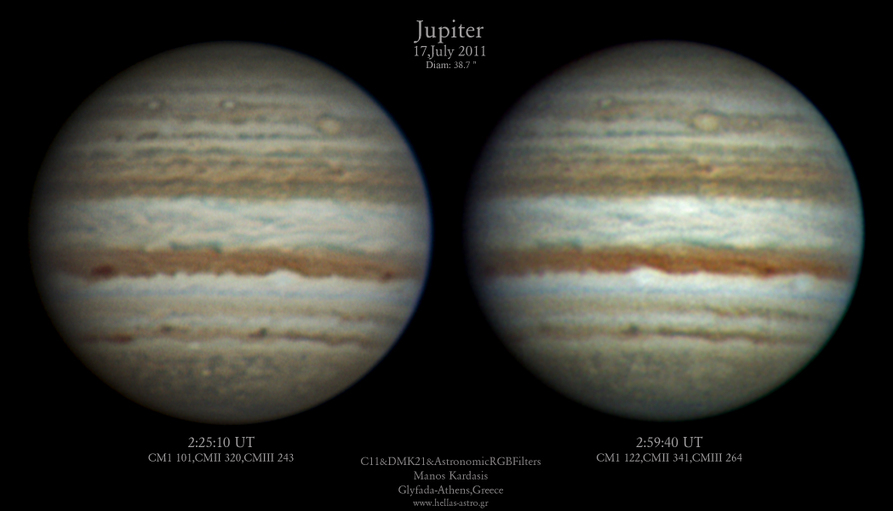
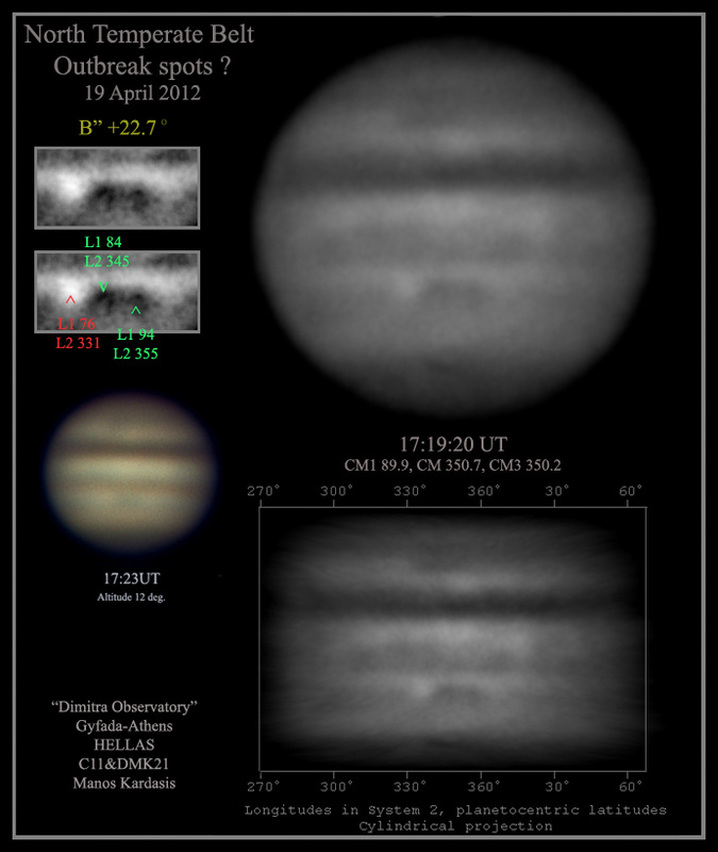
Τhis is a better processing and some calculations of my image on April,19.I think that the dark sreak has two darker regions possibly consists of 2 smaller dark spots (seen in the smaller image which is too much sharpened, maybe with artefacts). Jupiter imaging these days is a really hard case especially when the sun has set and Jupiter is in low altitude. I've been watching this spot in my videos and didn't have time to process (Unfortunately this happens to most of my images!). According to Dr.J.Rogers last mail the calculated latitudes below confirms this is on the NTBs jet-stream. As he said Gianluigi Adamoli has sent some images, including one on April 21, which shows the same NTB features -- and the bright spot has moved with DL1 ~ -5.5 deg/day. These facts confirm that this is the predicted NTB outbreak. We all wait for more images to come. Congratulations to J.Rogers and JUPOS team accurate predictions and work!
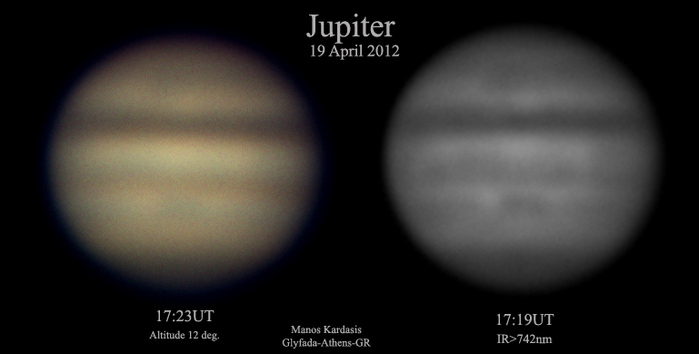
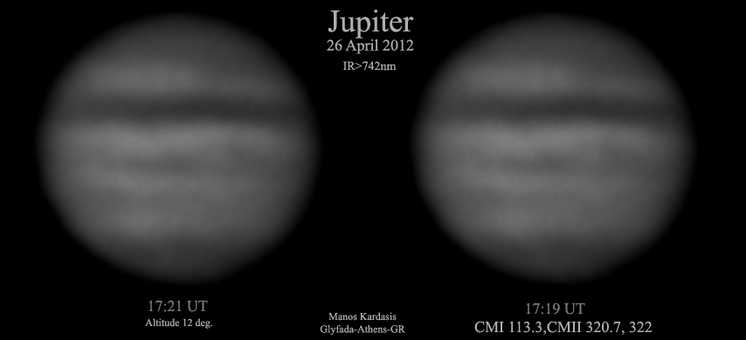
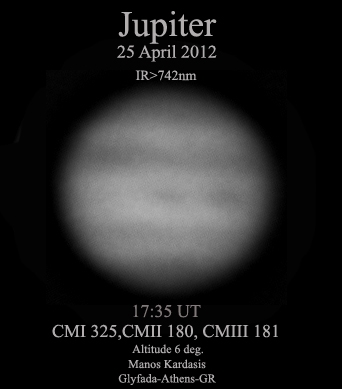
Hello, possibly this is my last image of Jupiter for this apparition.I really like to observe in any possible condition and not only make pretty images but potentially useful observations. Not much visible in this image, but there is a big dark feature obvious in the CM on NTB.Very difficult to catch anymore details at an altitude of near 10 degrees from western horizon. According to the latest report of Dr.J.Rogers this might be the start of a new NTB outbreak!
Here is the complete alert message from the BAA Jupiter Section director:
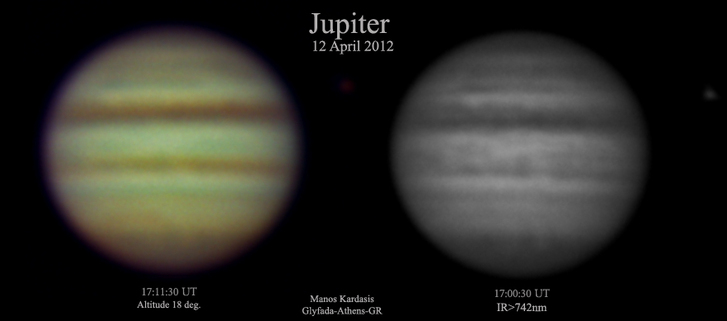
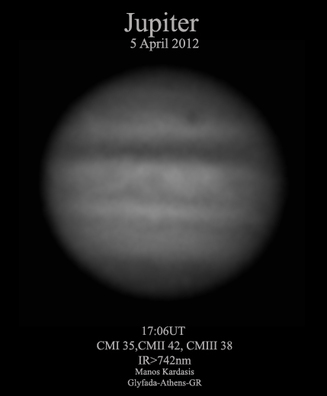
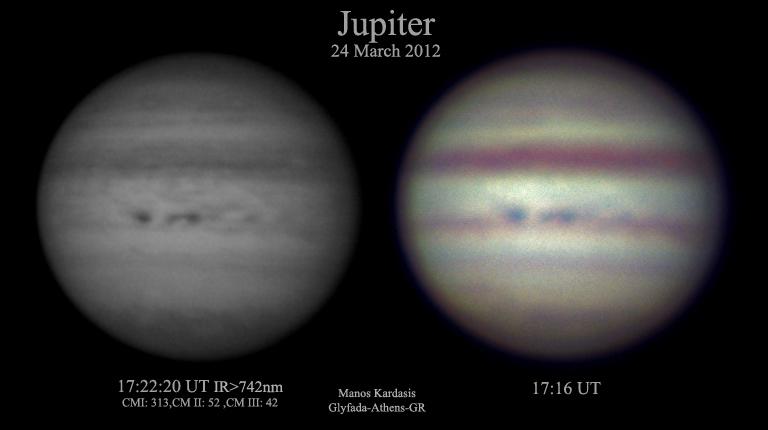
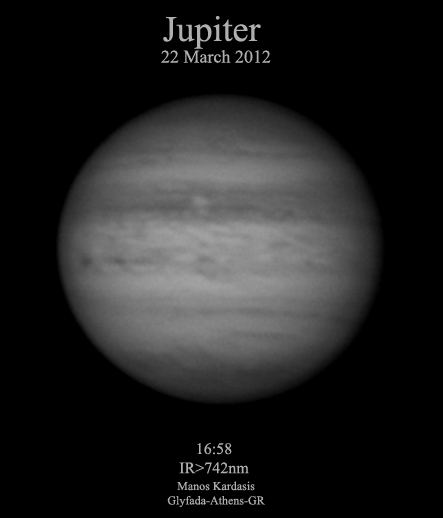
Hello all, Manos Kardasis has just sent the attached images, from April 19, noting the very dark spot on the NTBs, with a bright spot preceding it. This is very likely a new outbreak on the super-fast NTBs jet-stream! Confirmation is urgently needed! There was nothing there in his image of this longitude on April 12, nor in the few other images that I have seen from recent weeks (by H. Einaga and L. Zielke). Obviously Jupiter is now too close to the Sun for good-quality imaging but if anyone can get any images of these longitudes, even in daylight, or can send images from recent days, please do so.
On April 19, the bright spot was at approx. L1 =77 (L3 = 337).
If on the super-fast jet, it should move with DL1 ~ -5 deg/day (DL3 ~ -13 deg/day);
so on April 26 it should be around L1 ~ 42 (L3 ~ 246).
The dark streak should by now cover tens of degrees f. the bright spot.
Similar spots might also appear at other longitudes.
We have been expecting such an outbreak this year, as explained at:
http://www.britastro.org/jupiter/2010report19.htm
I shall eagerly await your images!
Best of luck,
John
_______________________________
John H. Rogers, Ph.D. Jupiter Section Director,
British Astronomical Association
<[email protected]>
http://www.britastro.org/jupiter/
Here is the complete alert message from the BAA Jupiter Section director:
Hello all, Manos Kardasis has just sent the attached images, from April 19, noting the very dark spot on the NTBs, with a bright spot preceding it. This is very likely a new outbreak on the super-fast NTBs jet-stream! Confirmation is urgently needed! There was nothing there in his image of this longitude on April 12, nor in the few other images that I have seen from recent weeks (by H. Einaga and L. Zielke). Obviously Jupiter is now too close to the Sun for good-quality imaging but if anyone can get any images of these longitudes, even in daylight, or can send images from recent days, please do so.
On April 19, the bright spot was at approx. L1 =77 (L3 = 337).
If on the super-fast jet, it should move with DL1 ~ -5 deg/day (DL3 ~ -13 deg/day);
so on April 26 it should be around L1 ~ 42 (L3 ~ 246).
The dark streak should by now cover tens of degrees f. the bright spot.
Similar spots might also appear at other longitudes.
We have been expecting such an outbreak this year, as explained at:
http://www.britastro.org/jupiter/2010report19.htm
I shall eagerly await your images!
Best of luck,
John
_______________________________
John H. Rogers, Ph.D. Jupiter Section Director,
British Astronomical Association
<[email protected]>
http://www.britastro.org/jupiter/